
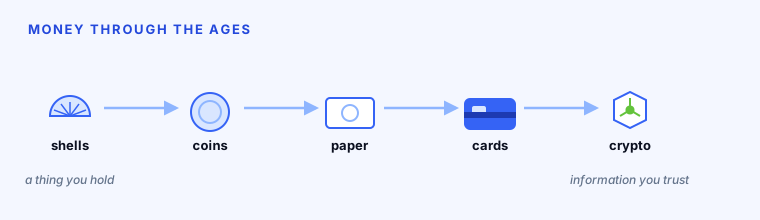
Money is the most widely used technology in human history, and one of the least examined. We hand it over dozens of times a day without asking why a slip of paper, a metal disc, or a number on a screen should be worth anything at all. This short book traces money from cattle to cryptography, and along the way answers that question — because the answer, it turns out, has stayed the same for three thousand years even as the technology changed beyond recognition.
1. The problem money solves
Imagine a world without money. A baker who wants shoes must find a cobbler who happens to want bread, right now, in the right amount. Economists call this the double coincidence of wants, and it makes trade painfully slow.
Money is the invention that dissolves the problem. It is a thing everyone will accept, so the baker can sell bread to anyone, hold the proceeds, and buy shoes later from anyone. To do this well, money needs to be three things at once: a medium of exchange (people will take it), a store of value (it keeps its worth over time), and a unit of account (a common yardstick for prices). Everything that follows is humanity trying to build a better version of that one tool.
