
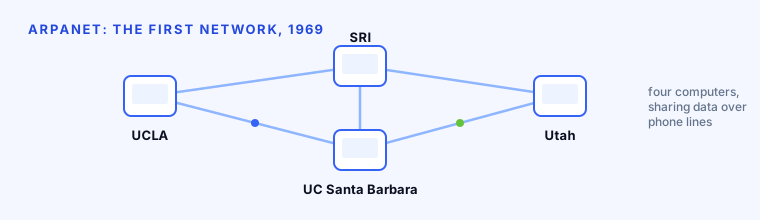
Four university computers, linked over phone lines — the first packet-switched network, and the internet's direct ancestor.
In 1969, the research network ARPANET carried its first message between two distant computers — at UCLA and the Stanford Research Institute — and by the end of the year linked four university sites. It was the first large network built on packet switching, and the direct ancestor of the internet.
Why it mattered
Before ARPANET, computers were islands: to use one, you sat at it. ARPANET showed that distant machines could share data and resources over ordinary telephone lines, breaking messages into packets that found their own way across the network.
The ideas proven here — packet switching, and later TCP/IP — are exactly the ones the modern internet still runs on. A fitting origin story: the first message was meant to be "LOGIN", but the system crashed after two letters — so the first "word" ever sent across the network was "LO".