
In late 2008 someone using the name Satoshi Nakamoto published a nine-page paper describing "a peer-to-peer electronic cash system". In January 2009 the Bitcoin network went live with its first block. The identity of its creator remains unknown to this day.
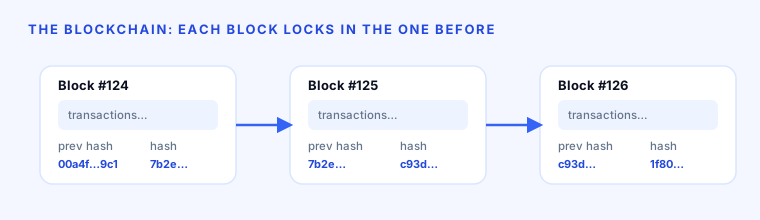
Each block carries the fingerprint of the one before it, so the whole history is chained together — and tamper-evident.
Why it mattered
Bitcoin solved a problem that had blocked digital money for decades: how to stop someone spending the same coin twice without a trusted middleman like a bank. Its answer was the blockchain — a shared ledger, copied across thousands of computers, where new entries are chained together cryptographically and confirmed by a network-wide competition (called proof of work) rather than by any single authority.
Whatever one makes of cryptocurrencies as an investment, the underlying idea was a genuine computer-science milestone: a way for mutually distrustful parties to agree on a single history of events with no one in charge. It launched an entire field of decentralised systems, smart contracts and digital assets — and forced banks, regulators and technologists everywhere to rethink what money and ledgers can be.