
For decades, running an online service meant buying servers: estimating demand, purchasing hardware, renting rack space and hiring people to keep it all alive — a huge cost and risk before you served a single customer. In 2006 Amazon Web Services changed the model by launching S3 (storage) and EC2 (rentable virtual servers).
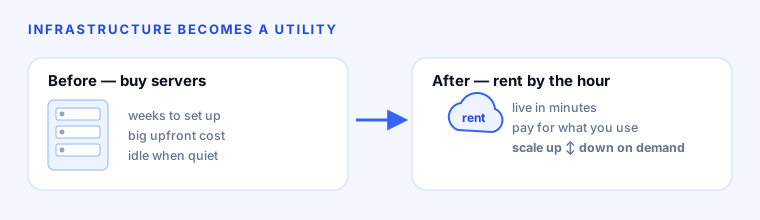
The shift from buying your own servers to renting computing by the hour — infrastructure as an on-demand utility.
Why it mattered
The idea was infrastructure as a utility. Instead of owning machines, you could rent computing and storage by the hour, over the internet, and scale up or down in minutes as demand changed. You paid for what you used, like electricity.
That collapsed the cost of starting something. A two-person startup could now launch a global service from a laptop, with the same class of infrastructure a large company used — and shut it down just as easily if it failed. The public cloud market that AWS opened was soon joined by Microsoft Azure and Google Cloud, and today the overwhelming majority of new software is built on rented cloud infrastructure rather than owned hardware. It also created a huge demand for the very skills a "build it, then teach it" platform exists to pass on.