
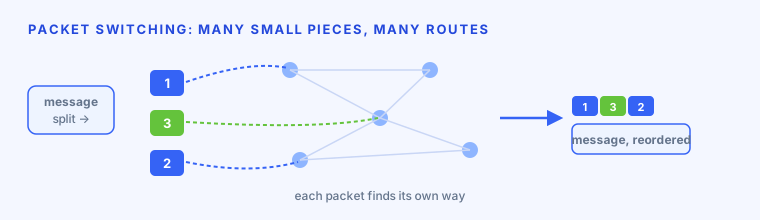
TCP/IP breaks a message into packets that each find their own way across the network, then puts them back in order at the other end.
In 1974, Vint Cerf and Bob Kahn published the design for TCP/IP — a shared set of rules that lets different computer networks, built by different people on different hardware, talk to one another as if they were a single network.
Why it mattered
Before TCP/IP, networks were islands: each spoke its own language and could not connect to the others. Cerf and Kahn's key idea was a common protocol that assumed almost nothing about the networks underneath — an "internetwork", or internet.
The work splits across two layers. IP, the Internet Protocol, gives every machine an address and carries data in small chunks called packets, each finding its own route across the network. TCP, the Transmission Control Protocol, then makes that best-effort delivery reliable — numbering the packets, re-sending any that go missing, and reassembling them in the right order. This layered, network-agnostic design is exactly why the internet could grow from a handful of computers to billions of devices without ever being rebuilt.