
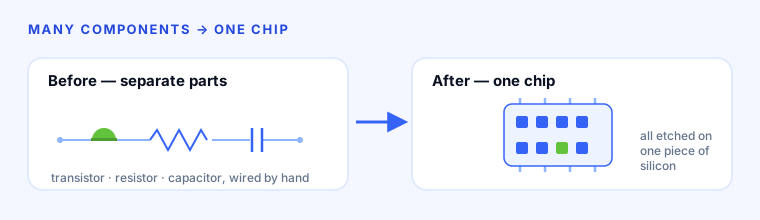
Many separate components — once wired together by hand — etched onto a single piece of silicon.
In 1958, Jack Kilby at Texas Instruments demonstrated the first integrated circuit: several electronic components built together on one piece of semiconductor, instead of wired together by hand. Months later, Robert Noyce at Fairchild independently devised a version far better suited to mass production.
Why it mattered
The transistor was a huge improvement on the vacuum tube, but early computers still needed thousands of them, each a separate part soldered into place — costly, bulky and error-prone. The integrated circuit put many components onto one chip, made in a single process.
That transformed the economics of electronics. Rather than adding parts one at a time, engineers could pack ever more of them onto a sliver of silicon — the trend later named Moore's law. The IC is the direct ancestor of the microprocessor and of every chip in every device today.