
In 1970, Edgar "Ted" Codd, a researcher at IBM, published A Relational Model of Data for Large Shared Data Banks. It proposed a deceptively simple idea: store data in tables of rows and columns, and describe the relationships between them with mathematics rather than with the tangled pointers and file layouts databases used at the time.
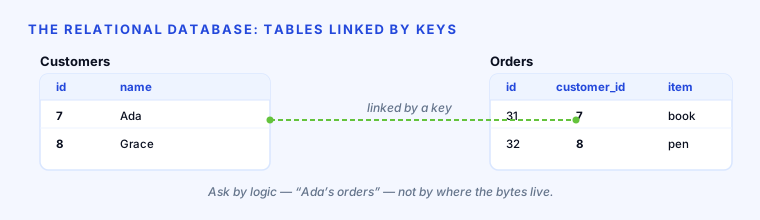
Data lives in tables joined by shared keys, so you can ask for "Ada's orders" by logic instead of by where the bytes are stored.
Why it mattered
The key move was separating what the data means from how it is stored. A programmer could ask for information — "all customers in Paris who ordered last month" — without knowing anything about where the bytes physically lived. The database engine figured out how to fetch it.
This is the foundation of SQL and of relational systems like PostgreSQL, MySQL, Oracle and SQL Server that still run the world's banks, shops and governments decades later. By turning data management into a problem of clean logic and tables, Codd's model made large, reliable, shared databases practical — and earned him the Turing Award. Even today's "NoSQL" and cloud databases are, in large part, a conversation with the ideas he set down in that paper.