
Early computers were "programmed" by physically rewiring them — a job that could take days. In 1945 John von Neumann circulated the First Draft of a Report on the EDVAC, describing a machine where the program is stored in memory as numbers, right alongside the data it works on.
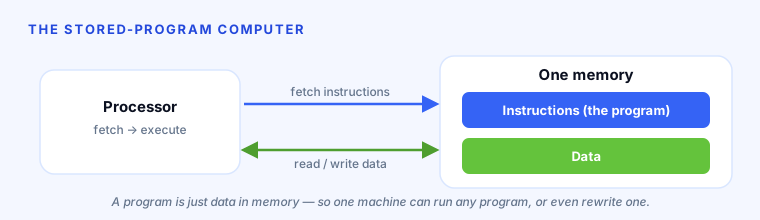
Instructions and data share one memory — which is why a single machine can run any program, and even modify one.
Why it mattered
This stored-program idea is the reason computers are flexible. Because instructions are just data in memory, a machine can switch tasks in an instant, and programs can even generate or modify other programs — which is what compilers, operating systems and today's software ecosystems all rely on.
The report also laid out the parts still taught as the von Neumann architecture: a memory, a control unit, an arithmetic/logic unit, and input/output. The blueprint drew on the work of many (the ENIAC team, and earlier thinkers like Turing), but its clear articulation here became the template. Almost every computer built since — from mainframes to the phone in your pocket — is a von Neumann machine.