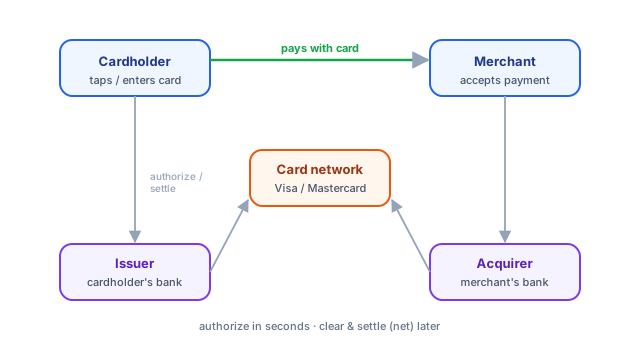
Tapping a card takes a second, but that second hides one of the most refined pieces of financial plumbing ever built. Understanding it means learning the four-party model — the structure behind essentially every Visa and Mastercard transaction.
The four parties
- Cardholder — you, paying with a card.
- Merchant — the shop or site accepting it.
- Issuer — the cardholder's bank, which issued the card and holds their money (or extends their credit).
- Acquirer — the merchant's bank, which "acquires" the transaction on the merchant's behalf.
Sitting between the two banks is the card network (Visa, Mastercard) — not a bank, but the switchboard that routes messages and sets the rules. That's five names, but the "four parties" are the two people and their two banks; the network is the connective tissue (see the diagram).
Two phases: authorize, then settle
This is the crucial idea, and it echoes the general payment lesson. A card payment is not one event:
- Authorization (seconds). When you tap, a request races merchant → acquirer → network → issuer. The issuer checks the card is valid, funds/credit are available, and it doesn't look fraudulent, then approves or declines. Money has not moved yet — a hold is placed.
- Clearing and settlement (hours to days). Later, transactions are batched, netted between banks, and the actual money is settled — the merchant's account is credited, the cardholder's is debited. Exactly the clearing-and-settlement machinery from Foundations.
Step through authorize → clear → settle in the widget below; it is the same sequence a card payment follows.
Who pays for all this: interchange
Nothing is free. On each transaction the acquirer pays the issuer a small interchange fee (often ~1–2%), most of which the merchant ultimately bears through its acquirer. Interchange is the economic engine of the card system: it funds issuer rewards, fraud protection and the "free" convenience cardholders enjoy — and it is fiercely fought over and regulated, because at global scale those small percentages are enormous sums. Understand interchange and you understand why cards, rewards and merchant surcharges work the way they do.
Cards are one rail among many. The next lesson looks at the others — real-time domestic rails and the trickier world of moving money across borders.